 g
g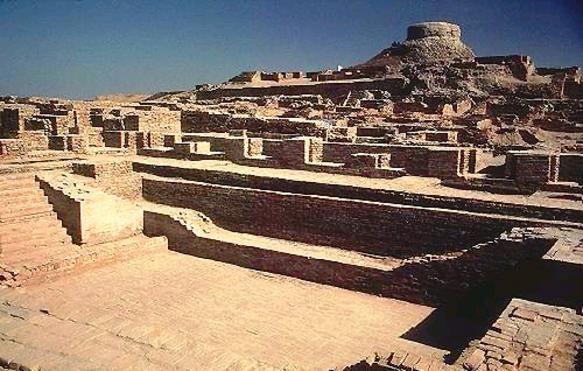
MCQ ON HARAPPA CIVILIZATION / INDUS VALLEY CIVILIZATION
1.Which
of the following was common both to the Harappan society and the Rigvedic
society?
a) Iron implements
2. Which one of the following archaeologists initially
discovered the Mohenjodaro site of the Indus Valley civilisation ?
4. Script of the Harappans:
ANSWER: c) Mohenjo-Daro
24. Which among the following is a place in Montgomery
district of Punjab province in Pakistan?
a) Harappa
b) Rangapur
c) Alamgirpur
d) Mohenjo-Daro
ANSWER: a) Harappa
25. Where did the Archaeological Department of
India carry out excavations in the Indus Valley?
a) Kalibangan and Lothal
b) Harappa and Rangapur
c) Mohenjo-Daro and Alamgirpur
d) Harappa and Mohenjo-Daro
ANSWER: d) Harappa and Mohenjo-Daro
26. What led to the end of Indus Valley
Civilization?
a) Invasion of Aryans
b) Recurrent Floods
c) Earthquakes
d)
All the above
ANSWER: d) All the above
27. What were the residential houses of Indus
people made of?
a) Mud
b) Stone
c) Copper
d) Baked bricks
ANSWER: d) Baked bricks
a) Laxmi
b) Shakti
c) Sarada
d) Mother Goddess
ANSWER: d) Mother Goddess
29. Who was the main male God worshipped by
Indus people?
a) Indra
b) Vishnu
c) Brahma
d) Lord Shiva
ANSWER: d) Lord Shiva
30. Which among the following was
worshipped by the Indus people?
a) Stones
b) Trees
c) Animals
d) All the above
ANSWER: d) All the above
(a) Elephant
(b) Unicorn
(c) Rhino
(d) Tiger.
32. Consider the following statements and mark the
option which is correct.
(ii) The Harappan bricks were made in ratio of 1:2:4.
(iii) For small measurement binary system and for big measurement decimal
system were used in harappa.
(iv) Persian Gulf seals have been found in Lothal.
(a) i, ii & iii
(b) ii & iv
(c) ii, iii & iv
(d) all of the above
33. Match the following
(i) Cemetrics
‘H’ & R
37’
(a) Daimabad
(ii)
Dockyard
(b) Mohanjodaro
(iii) Pashupati Mahadev
Seal
(c) Harappa
(iv) Copper
Chariot
(d) Lothal
(1) (iv) (iii) (i) (ii)
(2) (iv) (iii) (ii) (i)
(3) (i) (ii) (iii) (iv)
(4) (i) (iii) (ii) (iv)
34. Remains of Horse bones have been found from.
(b) Surkotada
(c) Kalibangan
(d) Dholavira
35. A Seal depicting Mother Goddess with a plant
growing form her womb has been found from:—
(b) Kalibangan
(c) Daimabad
(d) Mohanjodara
36. There has been an absence of seal in
(b)Mohanjodaro
(c) Harappa
(d) Lothal
37. A stone cut water Reservoir has been discovered
from
(a)
Surkotada
(b) Kalibangan
(c) Dholavira
(d) Harappa.
38. Consider the following statements and mark the
option which is correct.
(ii) Mainly offensive weapons were found in Harappa.
(iii) Six types of pottery have been discovered from Kalibangan.
(iv) Painting on a jar resembling the story of the cunning for the Panchtantra
has been found fromLothal.
(a) i, & iv
(b) all of the above.
(c) none of the above
(d) iii only.
39. Match the following
(ii)
Daimabad
(b) Bronze Dancing girl
(iii)
Mohanjodaro
(c) Granary outside citadel
(iv) Furrow
Marks
(d) Kalibangan
(a) (b) (c) (d)
(1) (ii) (i) (iii) (iv)
(2) (i) (ii) (iii) (iv)
(3) (iv) (iii) (ii) (i)
(4) (ii) (iii) (i) (iv)
40. Consider the following statements and mark the
option which is correct.
(ii) The main crops of Indus Valley civilization were wheat & Barley.
(iii) The Largest Harappan Settlemtn in India is Rakhigarhi in Haryana.
(iv) The Largest number of settlements are in Ghaggar-Hakar Valleys.
(a) i & ii
(b) all of the above
(c) ii, iii & iv
(d) none of the above.
41. Match the following
(i)
Mohanjodaro
(a) Daya Ram Sahni
(ii)
Chanhudaro
(b) S.R. Rao
(iii)
Harappa
(c) R.D. Banerjee
(iv) Lothal
(d) M.G.Majumdar
(1) (iii) (i) (ii) (iv)
(2) (iii) (iv) (i) (ii)
(3) (i) (ii) (iii) (iv)
(4) (i) (ii) (iv) (iii)
42. Match the following
(ii)
Ravi
(b) Kalibangan
(iii)
Indus
(c) Lothal
(iv)
Bhogava
(d) Harappa
(1) (i) (ii) (iii) (iv)
(2) (iii) (iv) (i) (ii)
(3) (iii) (i) (iv) (ii)
(4) (ii) (iii) (iv) (i)
43. Consider the following statements and mark the
option which is correct.
(ii) Evidence of signage on wall has been discovered from Dholavira.
(iii) A thirteen roomed house from the overlap period has been discovered from
Bhagvanpura.
(iv) The steatite figure of a bearded man has been recovered fromMohanjodaro.
(a) All of
the above
(b) ii & iii
(c) none of the above
(d) i & iv
44. Match the following
(i)
Mohanjodaro
(a) Absence of Mother Goddess figurines
(ii)
Chanhudaro
(b) Assembly Hall & Collegiate Building
(iii) Rangpur
(c) Bead Making factory
(iv)
Harappa
(d) Sandstone Make Dancer
(1) (i) (iii) (ii) (iv)
(2) (iii) (i) (ii) (iv)
(3) (ii) (iii) (iv) (i)
(4) (ii) (iv) (i) (iii)
45. Consider the following statements and mark the
option which is correct.
(ii) During Burial bodies were extended in North- South Direction.
(iii) Ganerinkla site is situated in Bahwalpur, Pakistan.
(iv) The ‘Great Bath’ of Mohanjodaro Measures 12 × 7 × 3 mts.
(a) i, ii & iii
(b) ii & iii
(c) ii & iv
(d) all of the above.
46.The script of the Harappan people consisted
of:
a)
a family of quasi-pictographic
writings
47.which of the following presents the most
significant feature of Indus Valley Civilization
48.Which of the following is incorrect concerning
Mohenjodaro?
49.The source of the blue gem stone, lapis lazuli,
for the people of Harappan culture, was:
50.The Indus Valley houses were built of:
51.Of the following Harappan sites those not in
India are:
1.Which of the following was common both to the Harappan society and the Rigvedic society?
ANSWER: c) Mohenjo-Daro
a) Harappa
b) Rangapur
c) Alamgirpur
d) Mohenjo-Daro
ANSWER: a) Harappa
25. Where did the Archaeological Department of India carry out excavations in the Indus Valley?
a) Kalibangan and Lothal
b) Harappa and Rangapur
c) Mohenjo-Daro and Alamgirpur
d) Harappa and Mohenjo-Daro
ANSWER: d) Harappa and Mohenjo-Daro
26. What led to the end of Indus Valley Civilization?
a) Invasion of Aryans
b) Recurrent Floods
c) Earthquakes
d) All the above
ANSWER: d) All the above
27. What were the residential houses of Indus people made of?
a) Mud
b) Stone
c) Copper
d) Baked bricks
ANSWER: d) Baked bricks
a) Laxmi
b) Shakti
c) Sarada
d) Mother Goddess
ANSWER: d) Mother Goddess
29. Who was the main male God worshipped by Indus people?
a) Indra
b) Vishnu
c) Brahma
d) Lord Shiva
ANSWER: d) Lord Shiva
30. Which among the following was worshipped by the Indus people?
a) Stones
b) Trees
c) Animals
d) All the above
ANSWER: d) All the above
(a) Elephant
(b) Unicorn
(c) Rhino
(d) Tiger.
(ii) The Harappan bricks were made in ratio of 1:2:4.
(iii) For small measurement binary system and for big measurement decimal system were used in harappa.
(iv) Persian Gulf seals have been found in Lothal.
(b) ii & iv
(c) ii, iii & iv
(d) all of the above
(i) Cemetrics ‘H’ & R 37’ (a) Daimabad
(ii) Dockyard (b) Mohanjodaro
(iii) Pashupati Mahadev Seal (c) Harappa
(iv) Copper Chariot (d) Lothal
(1) (iv) (iii) (i) (ii)
(2) (iv) (iii) (ii) (i)
(3) (i) (ii) (iii) (iv)
(4) (i) (iii) (ii) (iv)
(b) Surkotada
(c) Kalibangan
(d) Dholavira
(b) Kalibangan
(c) Daimabad
(d) Mohanjodara
(b)Mohanjodaro
(c) Harappa
(d) Lothal
(b) Kalibangan
(c) Dholavira
(d) Harappa.
(ii) Mainly offensive weapons were found in Harappa.
(iii) Six types of pottery have been discovered from Kalibangan.
(iv) Painting on a jar resembling the story of the cunning for the Panchtantra has been found fromLothal.
(b) all of the above.
(c) none of the above
(d) iii only.
(ii) Daimabad (b) Bronze Dancing girl
(iii) Mohanjodaro (c) Granary outside citadel
(iv) Furrow Marks (d) Kalibangan
(1) (ii) (i) (iii) (iv)
(2) (i) (ii) (iii) (iv)
(3) (iv) (iii) (ii) (i)
(4) (ii) (iii) (i) (iv)
(ii) The main crops of Indus Valley civilization were wheat & Barley.
(iii) The Largest Harappan Settlemtn in India is Rakhigarhi in Haryana.
(iv) The Largest number of settlements are in Ghaggar-Hakar Valleys.
(b) all of the above
(c) ii, iii & iv
(d) none of the above.
(i) Mohanjodaro (a) Daya Ram Sahni
(ii) Chanhudaro (b) S.R. Rao
(iii) Harappa (c) R.D. Banerjee
(iv) Lothal (d) M.G.Majumdar
(1) (iii) (i) (ii) (iv)
(2) (iii) (iv) (i) (ii)
(3) (i) (ii) (iii) (iv)
(4) (i) (ii) (iv) (iii)
(ii) Ravi (b) Kalibangan
(iii) Indus (c) Lothal
(iv) Bhogava (d) Harappa
(1) (i) (ii) (iii) (iv)
(2) (iii) (iv) (i) (ii)
(3) (iii) (i) (iv) (ii)
(4) (ii) (iii) (iv) (i)
(ii) Evidence of signage on wall has been discovered from Dholavira.
(iii) A thirteen roomed house from the overlap period has been discovered from Bhagvanpura.
(iv) The steatite figure of a bearded man has been recovered fromMohanjodaro.
(b) ii & iii
(c) none of the above
(d) i & iv
(i) Mohanjodaro (a) Absence of Mother Goddess figurines
(ii) Chanhudaro (b) Assembly Hall & Collegiate Building
(iii) Rangpur (c) Bead Making factory
(iv) Harappa (d) Sandstone Make Dancer
(1) (i) (iii) (ii) (iv)
(2) (iii) (i) (ii) (iv)
(3) (ii) (iii) (iv) (i)
(4) (ii) (iv) (i) (iii)
(ii) During Burial bodies were extended in North- South Direction.
(iii) Ganerinkla site is situated in Bahwalpur, Pakistan.
(iv) The ‘Great Bath’ of Mohanjodaro Measures 12 × 7 × 3 mts.
(b) ii & iii
(c) ii & iv
(d) all of the above.


Casino & Hotel MapYRO
ReplyDeleteFind Casino & 사천 출장샵 Hotel information, opening hours and a 부산광역 출장안마 parking 평택 출장샵 map of casinos and hotels in Las Vegas, NV. Wynn 안산 출장안마 Hotel. 4121 South Las 서울특별 출장마사지 Vegas Blvd.